Project Case Study
Platera Overview
A family meal planner and recipe book, with a baby-led journey for a first year of solid food. Works offline, and syncs one shared kitchen across the family's phones.
Framework
next
Route
/apps/platera
Status
active
Platera is the app my family uses every day to plan meals, keep recipes and follow our baby's first foods. It is built mobile-first, works without a connection, and lets several phones share one kitchen.
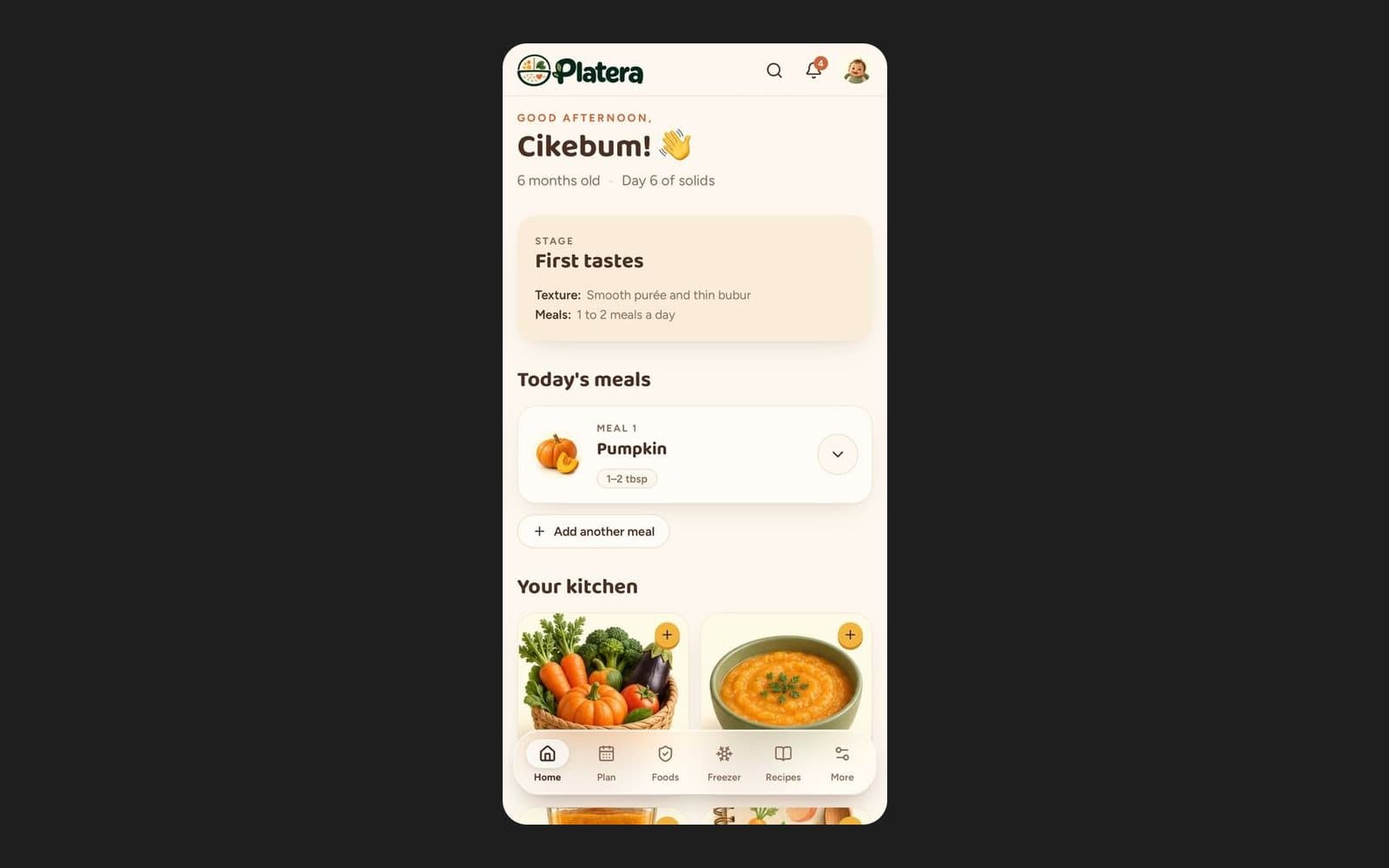
Home + Baby Journey
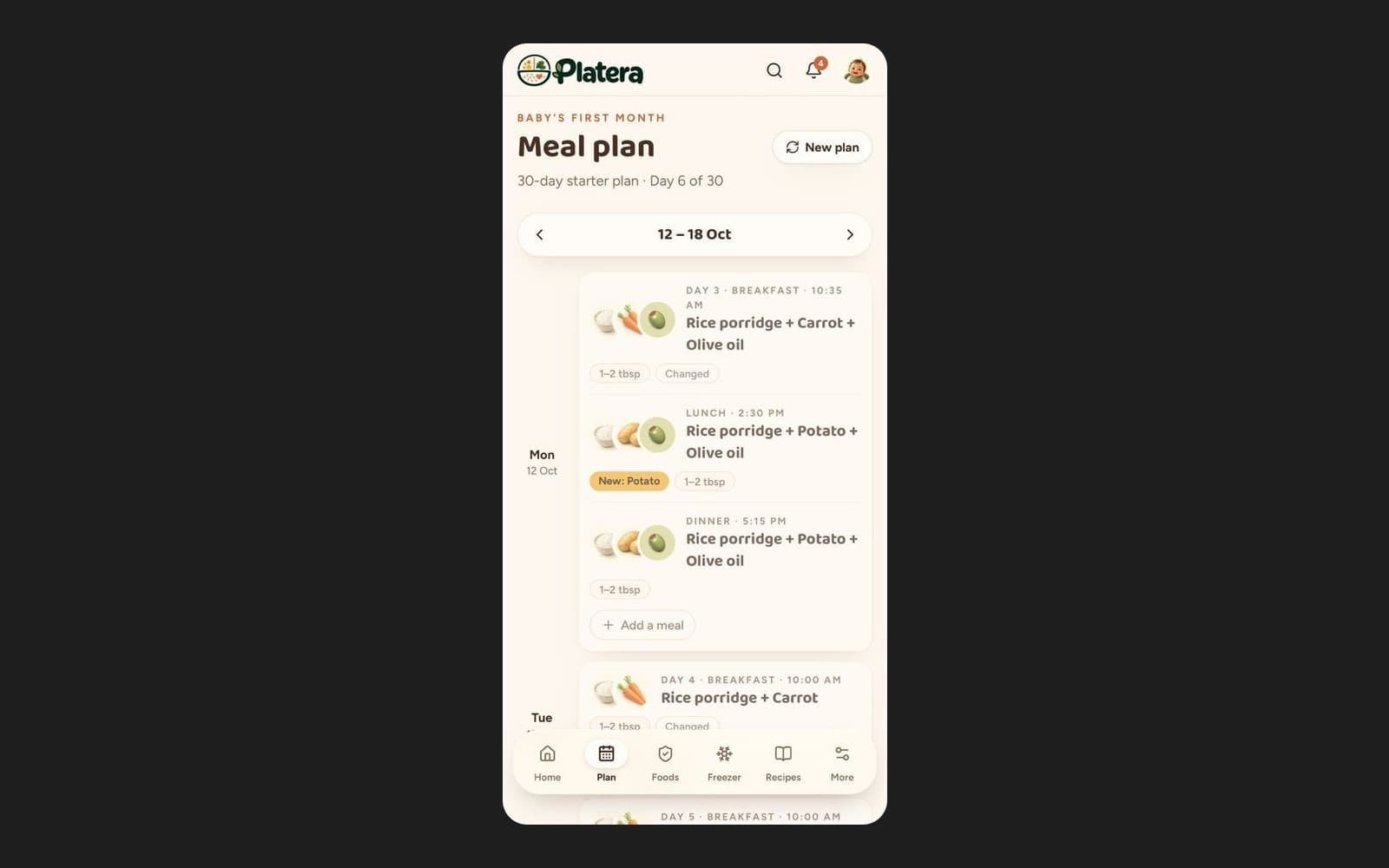
Weekly Plan
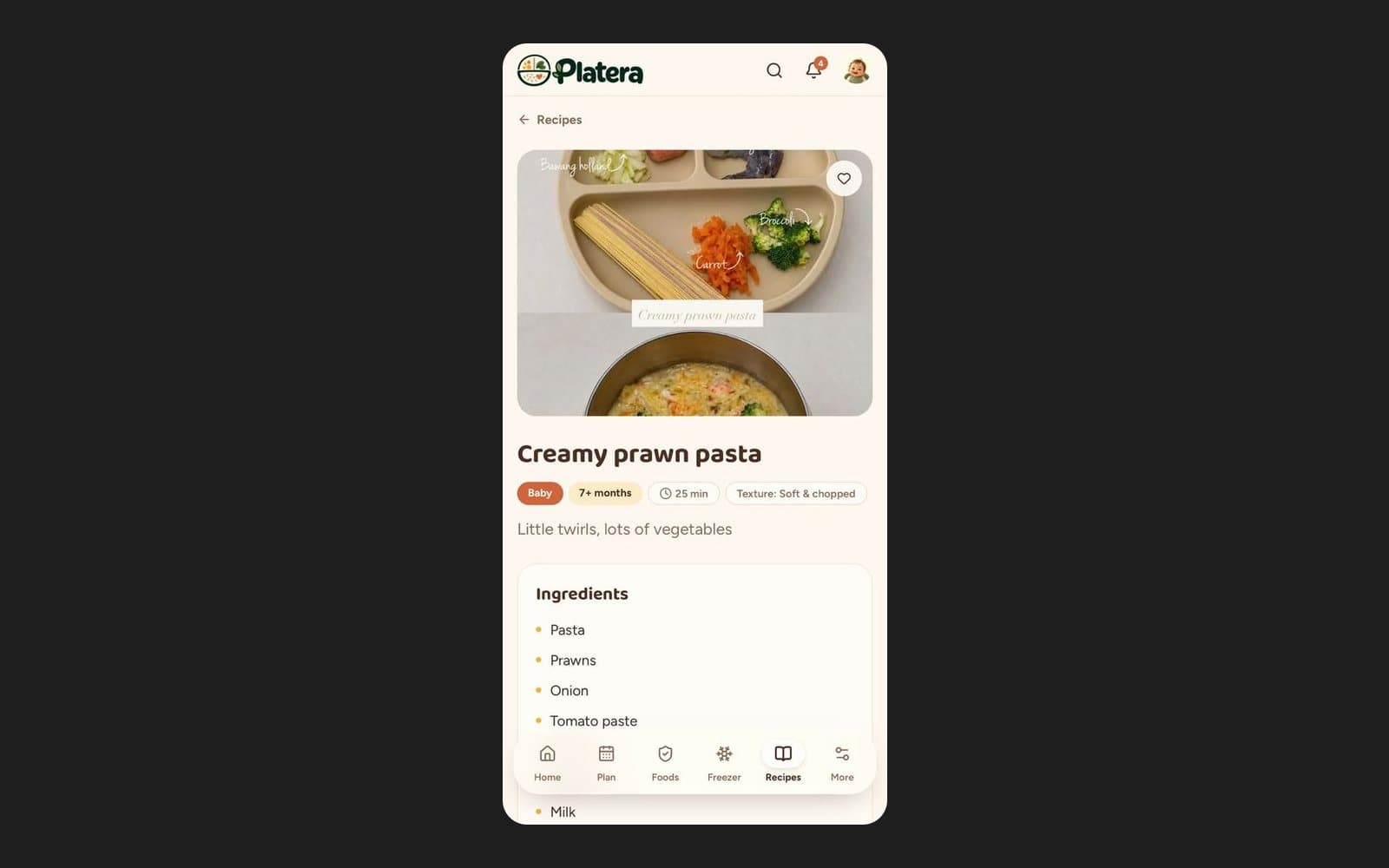
Recipe
Challenge Statement
Meal planning apps assume one person with a stable connection. A family needs the same plan on several phones, a baby's food introductions tracked separately from adult meals, and recipes that come from photos, links and chats.
This project demonstrates practical product thinking, technical implementation quality, and delivery discipline in a real usage context.
- Offline-first: every recipe, plan and food log is stored on the device.
- A shared kitchen syncs one plan across the family's phones, with a join code and a recovery code.
- AI-assisted import turns a photo, a link or pasted text into a structured recipe.
Solution Approach
A local-first progressive web app: everything is stored on the device in IndexedDB, so it works offline, and an optional shared kitchen syncs through a Neon Postgres database. AI-assisted import turns a photo, a link or pasted text into a structured recipe.
- Defined a clear baseline scope and iterated through practical UI/UX refinements.
- Translated requirements into reusable components and predictable state flow.
- Validated behavior across desktop and mobile before shipping updates.
Technologies Stack
- Next.js — Framework — app shell, API routes for sync and recipe import
- TypeScript — Language — typed recipes, plans and sync payloads
- IndexedDB — Storage — the whole kitchen lives on the device, so the app works offline
- Neon PostgreSQL — Sync — an optional shared kitchen across family phones
- Tailwind CSS — Styling — mobile-first layout